

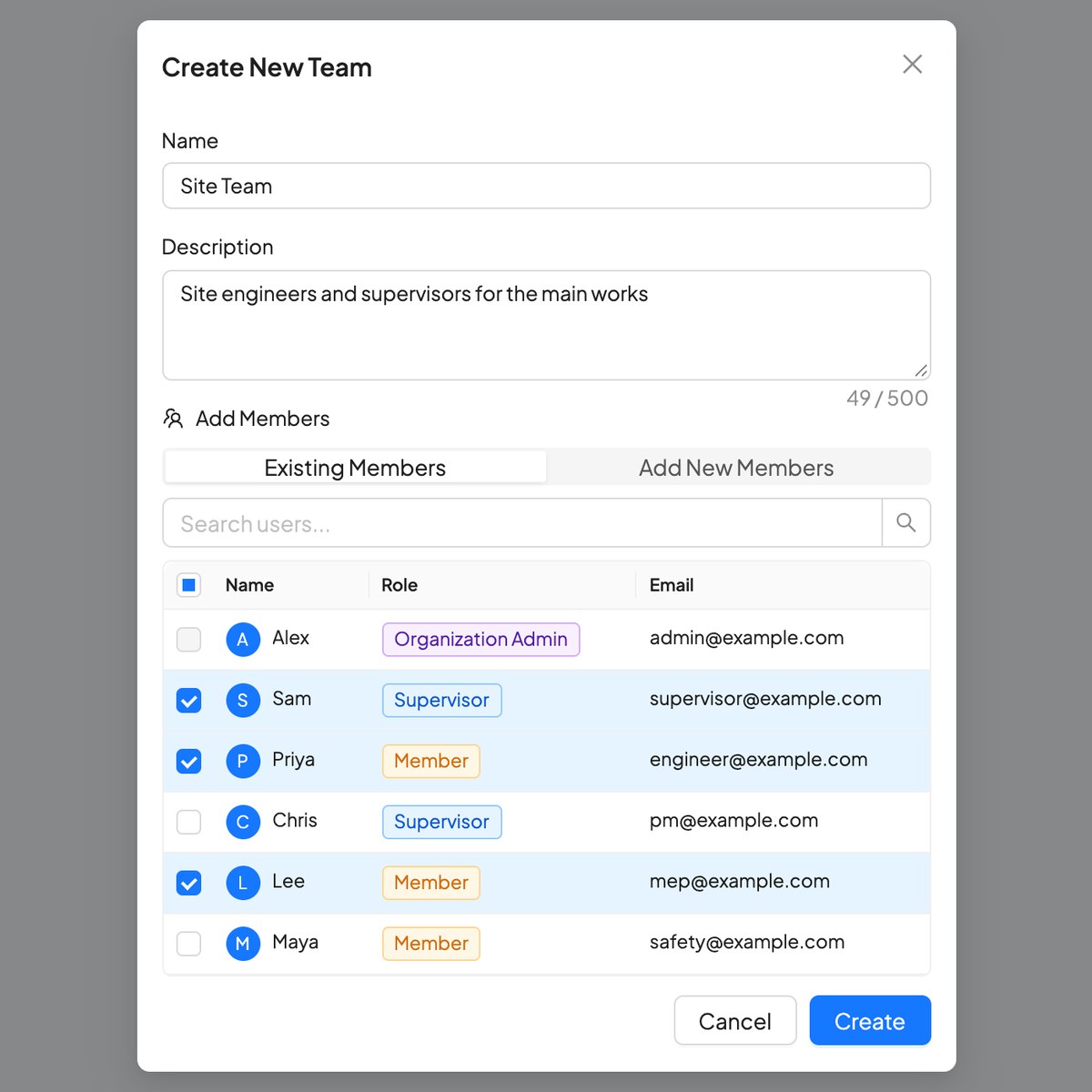
A team for every trade
Set up a team for each trade, so a charge goes to the people who can answer it.
Back-charges and damage disputes
Most back-charge disputes come down to that question. SpatialSense keeps a dated 360° walk of the site every time you capture it, so you can open the same spot before and after the damage and show both sides the same record.
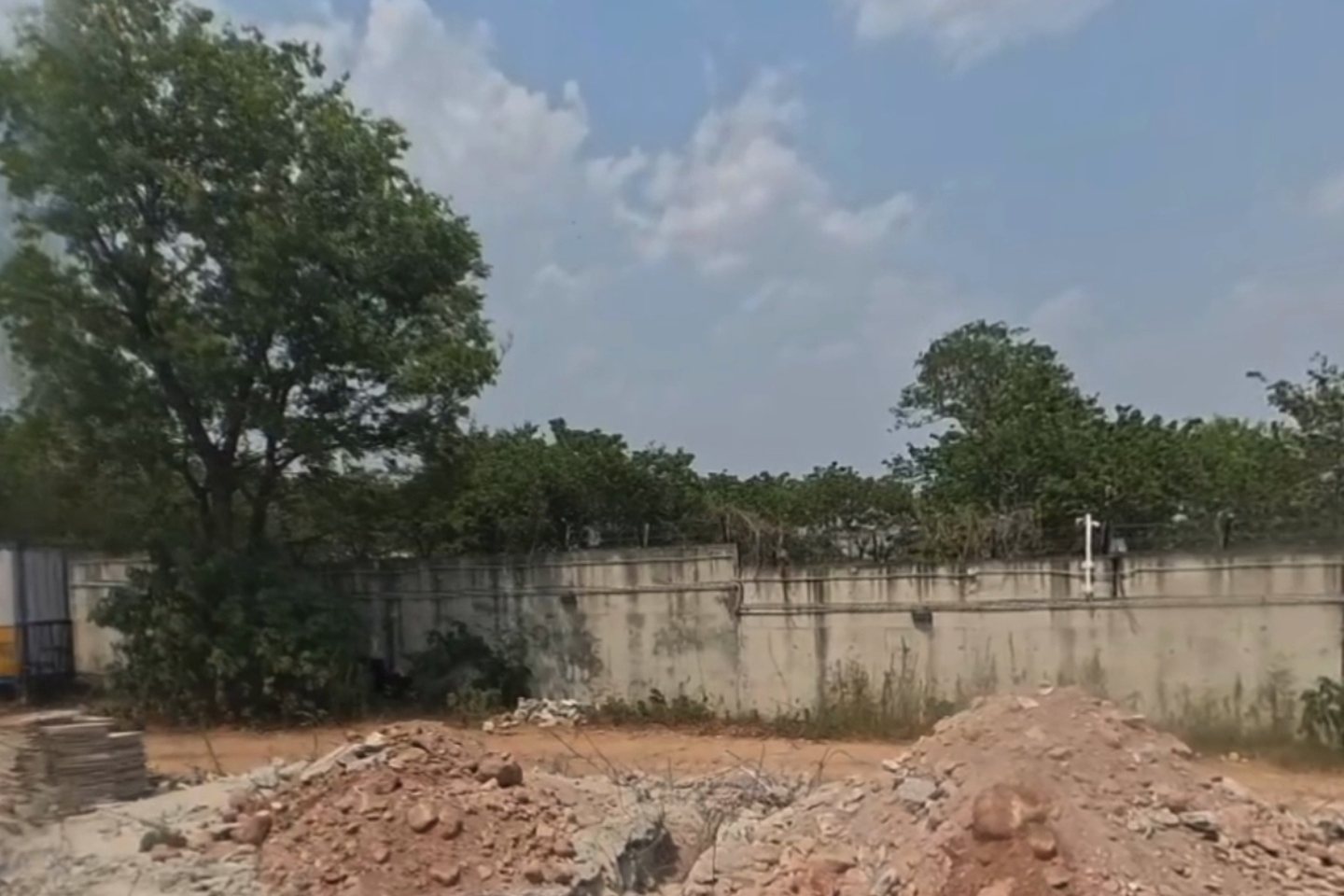
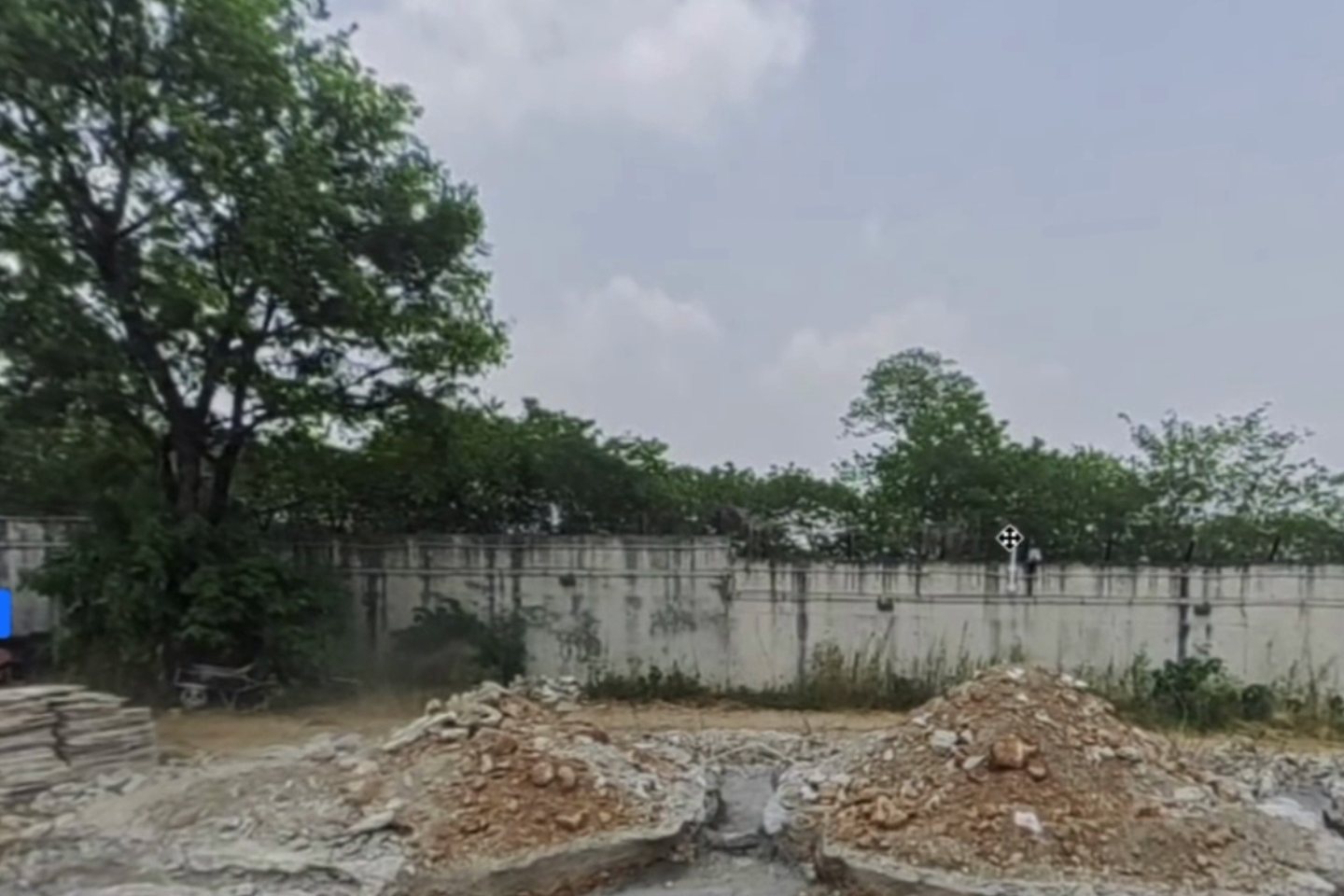
A back-charge passes a cost to the party that caused it: damage to finished work, clean-up, rework. Many are disputed for the same reason. The only proof is a photo taken after the damage, and nobody can show what the spot looked like before, or when it changed. Regular 360° walks fix that. Every area has a dated record, so you open the spot on the last walk before the damage and the first walk after it, side by side.
It starts long before the dispute, with a walk you were doing anyway.
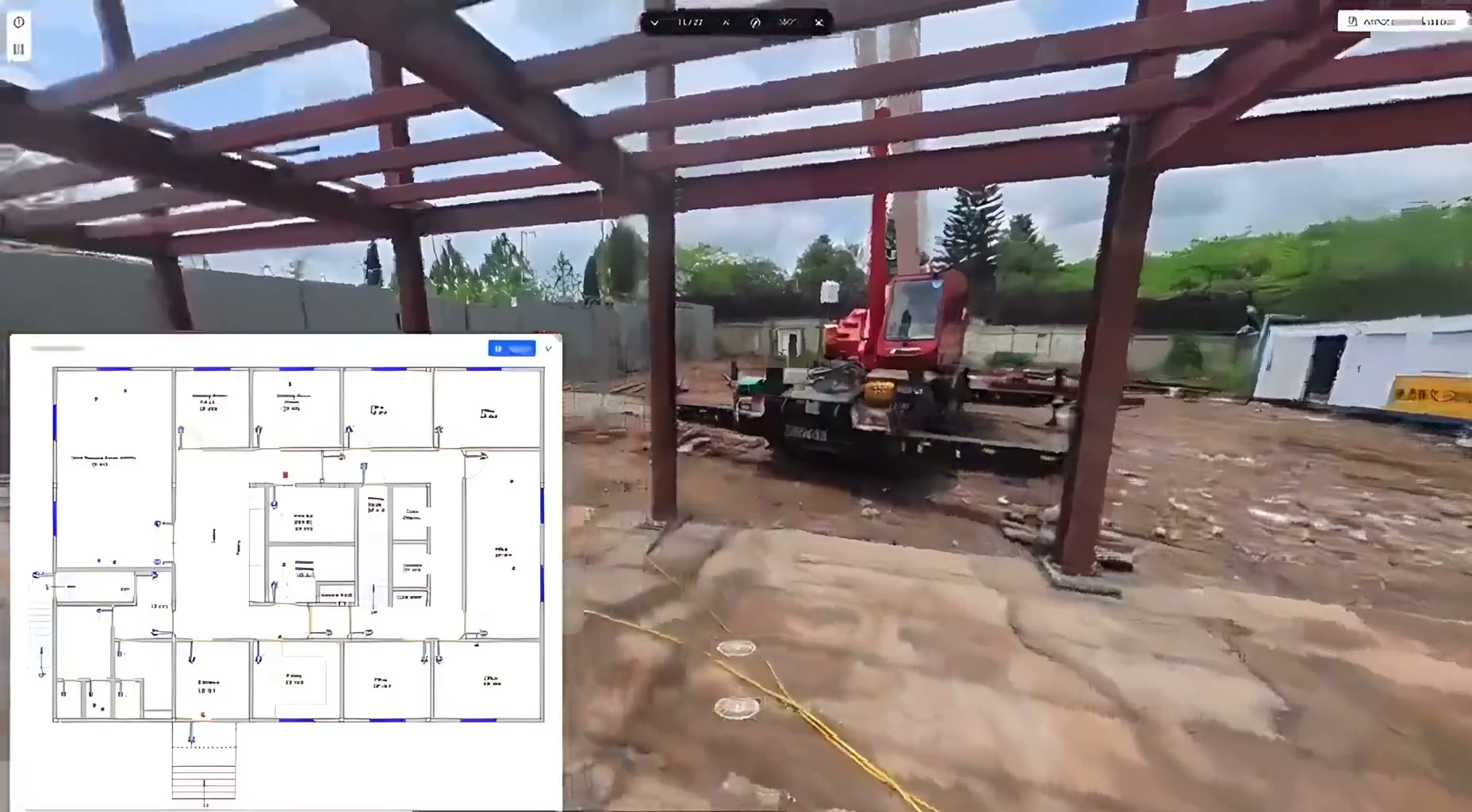
Weekly walks, or one before and one after each trade, give every area a dated record.
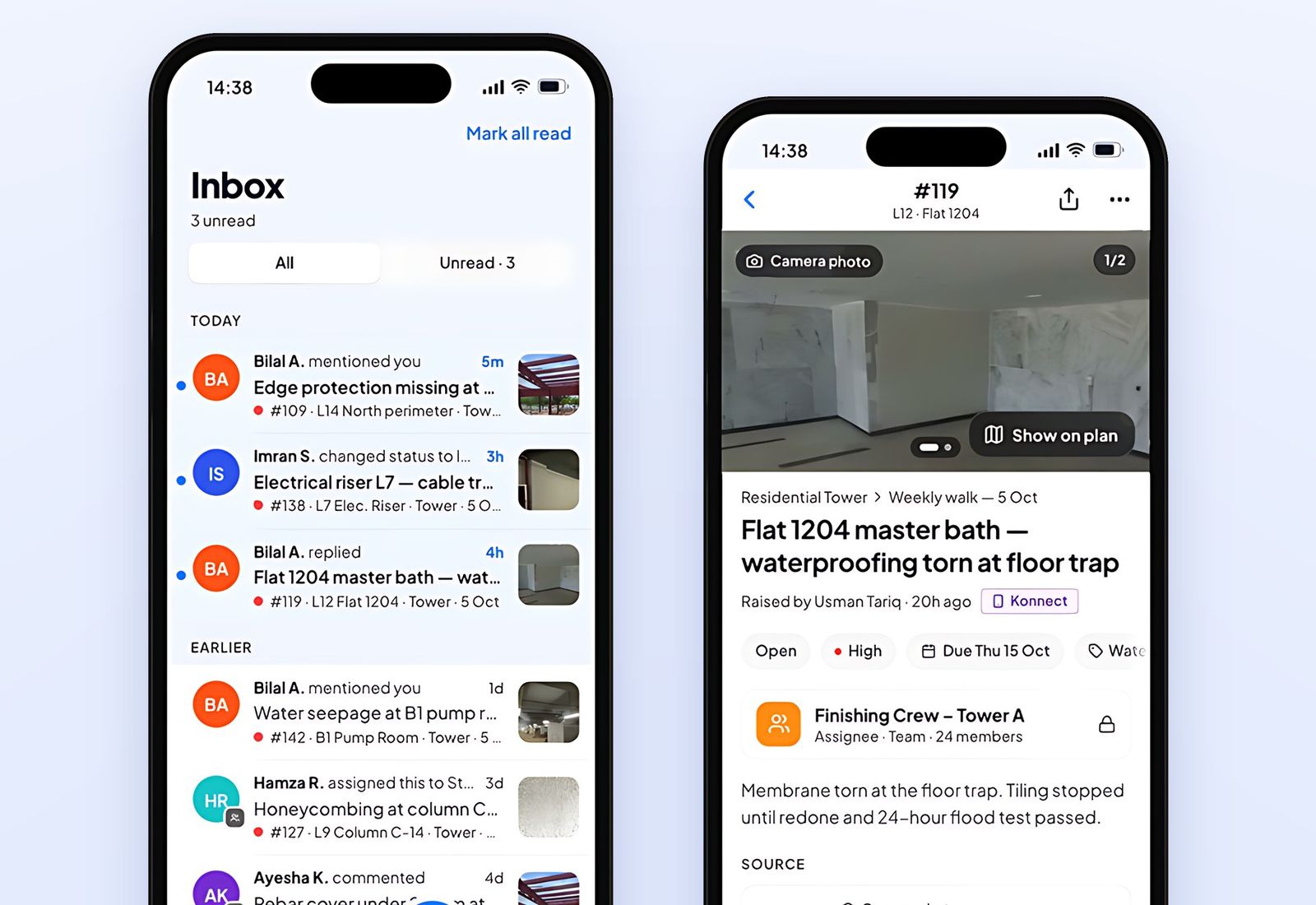
Pin it on the spot with photos and a note, and assign it to the trade’s team with a due date.
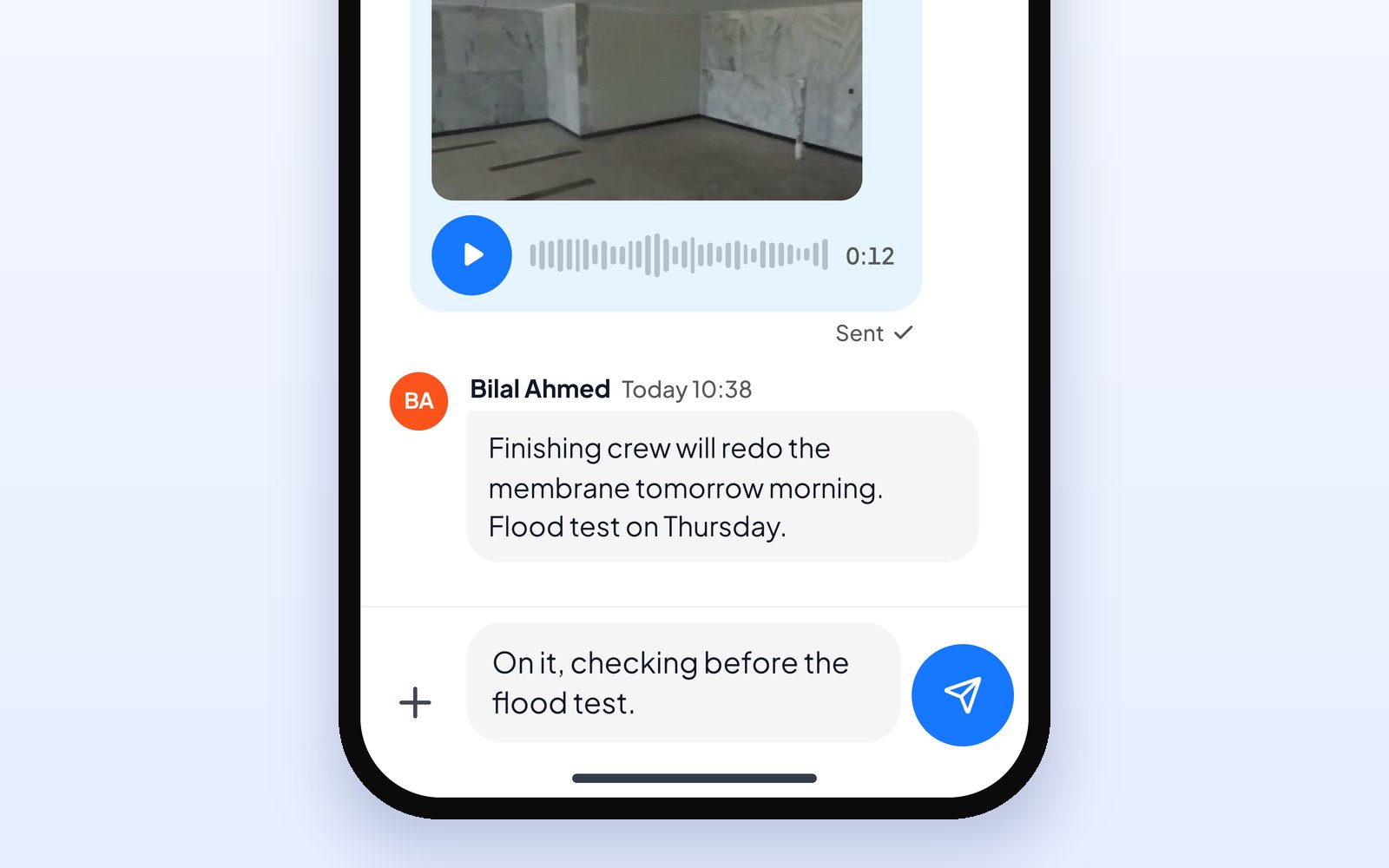
The trade sees the issue in the Konnect app and replies on the same thread, so both sides are on one record.
Forum threads and contract guides tell the same story from both sides of the contract.
A photo of the damage shows that it exists. It does not show that it is new, or who was in the area when it happened.
The trade hears about the charge weeks later, after the area is closed up and they can no longer look.
Each side has its own photos and its own diary, and neither can see the other’s.
A shared, dated record is fair to everyone. It protects the main contractor from absorbing costs it did not cause, and it protects the trade from paying for damage that was already there.
Set up a team for each trade, so a charge goes to the people who can answer it.
Step through every stop of a walk, with the route on the map beside you.
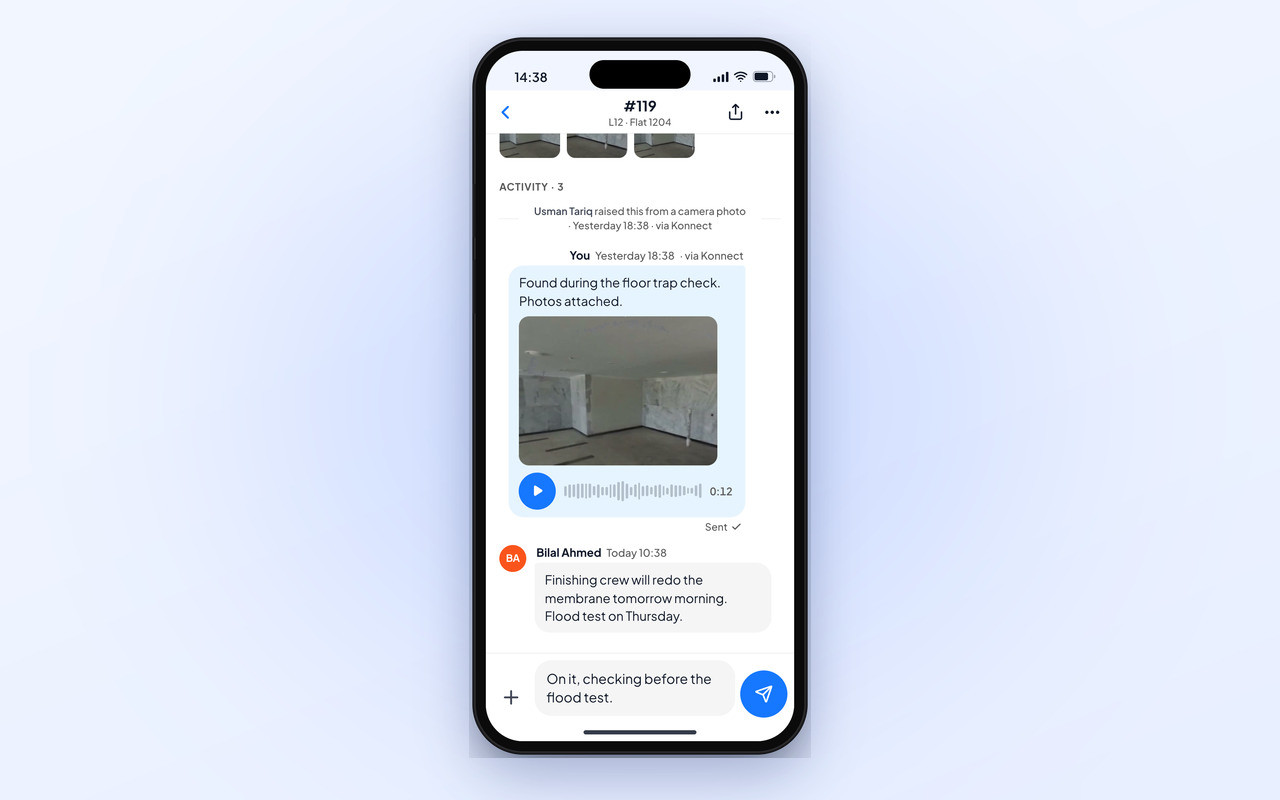
Photos, replies and status changes stay on the issue, in order, for whoever reviews the charge.
The same damaged wall, argued two ways.
| With dated walks in SpatialSense | With photos taken after the fact | |
|---|---|---|
| What it looked like before | The last walk before the damage, from the same viewpoint. | Usually nothing. |
| When it happened | Between two dated walks. | Sometime before the photo. |
| Telling the trade | An issue assigned to their team, with an alert. | An email or a line in a meeting. |
| Their reply | On the same issue, with their own photos. | In a separate email chain. |
| Showing a third party | A link that opens without a login. | A folder of attachments. |
The record has to exist before the damage does.
A cost one party on a project passes to another for work or damage it caused, such as repairing damaged finishes, cleaning up or redoing work. It is usually raised by the main contractor against a subcontractor, under the terms of their contract.
A record of the area before and after the damage, dated, with a clear location; notice to the party involved soon after it was found; and a record of their reply. Your contract sets the notice rules, so check it.
If an area is walked regularly, the damage happened between two dated walks. You can open the same spot on both dates side by side, which narrows down when it happened and who was working there.
Yes. The same record shows damage that was already there before the trade arrived, and the trade can reply on the issue with its own photos.
No. SpatialSense keeps the record: the walks, the issue and the replies. Who pays is for your contract and the people who run it.
Walk the site on a routine, and the next back-charge is settled by looking, not arguing.